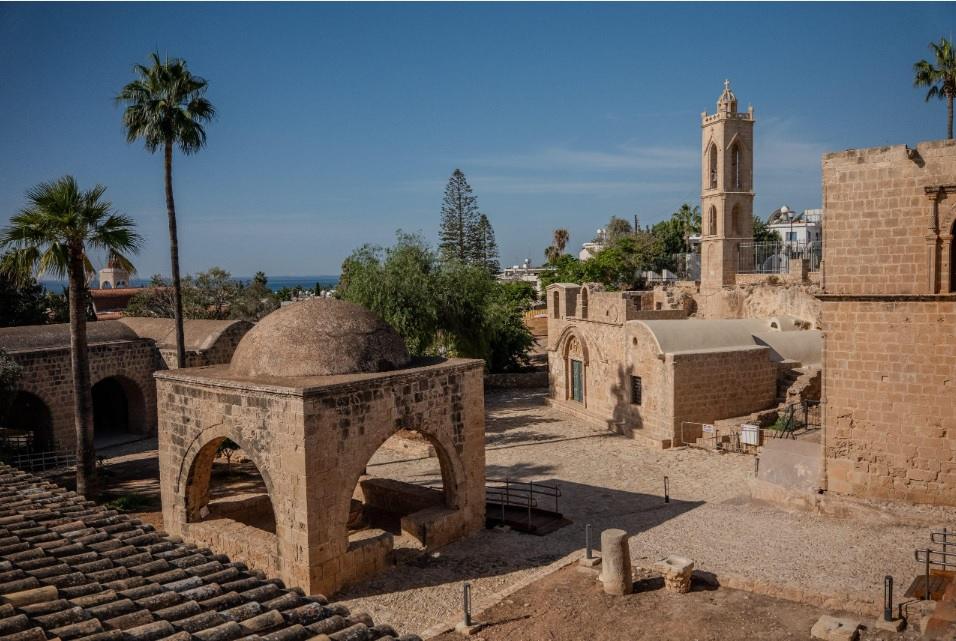
From Dasaki Achnas to Ayia Napa, a route through the churches of free Famagusta: Ayios Kendeas, Deryneia facing the fenced town, Sotira and the monastery of Ayia Napa.
Since 1974 Famagusta district has been divided. The town of Famagusta and most of its villages lie in the occupied area. In the free part, in the red-soil villages around Paralimni and Ayia Napa, thousands of refugees live alongside the local people. This route passes churches that keep that memory, as well as some of the oldest monuments in the area. At Dasaki Achnas, the settlement built by the displaced people of Achna, the church of Panagia Tracheia keeps an icon from the church of their occupied village. At Deryneia, by the checkpoint, you can see the fenced town of Famagusta. In between are Ayios Kendeas and Sotira, with its Byzantine churches. At the end is the monastery of Ayia Napa, which gave the town its name.
The route
The route runs from west to east. First comes Dasaki Achnas, inside the British Sovereign Base Area of Dhekelia. Next is the monastery of Ayios Kendeas, on a hill near Avgorou. Then go on to Deryneia: next to the crossing point, the Famagusta Municipality's Cultural Centre has a small museum, shows a short film and has a viewing platform looking towards Varosha. Heading south, stop at Sotira and finish at Ayia Napa.
Practical notes
- At Deryneia you are beside the buffer zone. Follow the signs and instructions and do not photograph military positions.
- The old church of Ayia Marina at Deryneia stands inside the buffer zone. A liturgy is held there on 17 July, escorted by UN peacekeepers.
- Many of the small Byzantine chapels of Sotira and Deryneia are usually kept locked. Ask at the parish church or the community office.
- Ayia Napa is very busy in summer. The monastery is in the town centre and is quieter early in the morning or late in the afternoon.
- St Kendeas is honoured on 6 October, which is also the great feast of Avgorou.
Sources
- Visit Famagusta – Culture and history: monasteries and picturesque chapels (visitfamagusta.com.cy)
- Visit Famagusta – Avgorou (visitfamagusta.com.cy)
- Wikipedia (en) – Achna (en.wikipedia.org) · CC BY-SA 4.0
- Wikipedia (en) – Deryneia (en.wikipedia.org) · CC BY-SA 4.0
- Visit Cyprus – Cultural Centre of Famagusta (Ammochostos) Municipality (visitcyprus.com)
- Mystagogy (J. Sanidopoulos) – Saint Kendeas the Wonderworker of Cyprus (johnsanidopoulos.com)
- Visit Cyprus – Agia Napa Monastery (audio guide) (visitcyprus.com)
- Lonely Planet – Agia Napa Monastery (lonelyplanet.com)
The route
Driving: ≈ 55 min · 38 kmFrom the first stop to the last, not counting the visits; an estimate without traffic (OpenStreetMap).
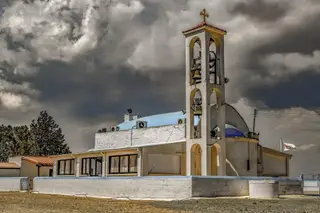 1ChurchΙερός Ναός Παναγίας ΤραχιάςSynoikismos AchnasA 15th-century church with an arched roof and remains of frescoes. It keeps a 16th-century icon of the Virgin brought from the church of Ayia Marina in occupied Achna, whose displaced villagers camped at Dasaki in 1974 and later built their new settlement here.
≈ 14 min · 9.6 km to the next stop
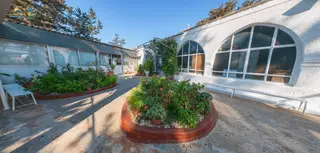 2MonasteryΙερά Μονή Αγίου ΚενδέαAvgorouA 15th- or 16th-century monastery on a hill above the road. Tradition says St Kendeas, of Germanic (Alemannic) origin, became a monk in Palestine and lived as a hermit near Avgorou. The holy water in the cave where he is said to have spent his last days still flows.
≈ 17 min · 14 km to the next stop
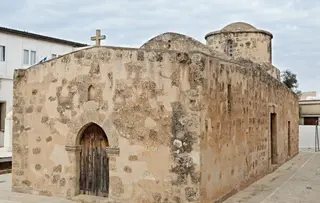 3ChapelΆγιος ΓεώργιοςDeryneiaA Byzantine chapel of the 15th–16th century with a carved iconostasis and a fresco of St George on horseback. From here it is a few minutes to the Famagusta Municipality's Cultural Centre and its viewing platform over Varosha.
≈ 8 min · 4.4 km to the next stop
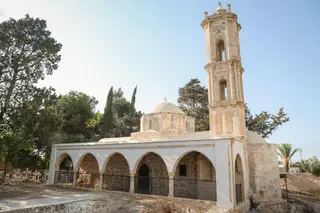 4ChurchΠαλαιός Ιερός Ναός ΜεταμορφώσεωςSotiraThe old church of the Transfiguration stands on the site of a 4th-century basilica, parts of whose mosaic floor remain. It took its present form in the 16th century, and its 13th-century frescoes show the influence of Constantinople. The village feast is on 6 August.
≈ 15 min · 9.6 km to the next stop
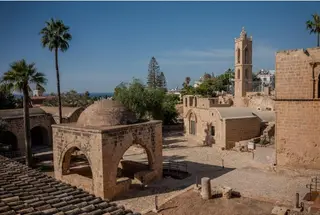 5MonasteryΙερά Μονή Αγίας ΝάπαςAgia NapaA medieval monastery built like a fortress around 1500, in the Venetian period. Tradition says a hunter found an icon of the Virgin in a cave in the woods (the 'napes'), which gave the place its name. See the crypt, the fountain in the courtyard and the great sycamore at the south gate.